
I need your help to keep this blog going! Please read this and consider contributing something. Also, while you’re out there on the internet tubes, please consider liking this blog’s Facebook page and following me on Twitter! And please share my work with your friends/followers to help me grow the audience around here! Thank you!
The context for all those international pronouncements I just mentioned with respect to Libya is that the 23 nations who are actually participating in America’s anti-ISIS coalition met today in Rome to talk about what to do next. The plan, apparently, is to keep doing what they’re all doing, but do more of it:
Mr. Kerry said that the coalition’s gains in pushing back ISIS in Iraq and Syria were “undeniable,” but that its members had to do more to sustain the success. On Tuesday, some countries were asked to provide additional training, medical supplies or other services for Iraqis, while Norway agreed to help clear mines from liberated areas of Iraq, including Ramadi, where ISIS left behind explosives and booby-trapped buildings.
At a conference in London on Thursday, Mr. Kerry said, the United States and other nations will announce additional humanitarian aid for Syria, where he said 13.5 million people, including six million children, were in urgent need. Next week in Munich, diplomats will discuss “additional contributions” that can be made by a group of nations pushing for a resolution of Syria’s civil war, he said. And defense ministers of the coalition countries will assemble for the first time next week in Brussels to talk about expanding the military offensive against ISIS.
Now, I say that 23 nations met in Rome. The thing is, the anti-ISIS coalition is supposed to include 66 member nations. Only 23 of them, however, actually seem to be doing anything. Most of the other 43 are too busy dealing with their own priorities to do anything about ISIS, and to be honest a few of those are dealing with their own priorities in ways that actually make life easier for ISIS, not to single any one country out in particular, per se. Obviously those nations are free to determine their own national priorities and act accordingly. But part of the reason they haven’t prioritized the fight against ISIS is because they’re under the assumption that America will take care of it. In other words, they’re free-riding on America’s anti-ISIS fight, as Paul Pillar explains:
It’s not just the Israelis and Jordanians who are thinking along such lines. Although U.S. Secretary of Defense Ashton Carter says, “I have personally reached out to the ministers of defense in over forty countries around the world to ask them to contribute to enhancing the fight against ISIL,” the New York Times reports that “the United States has had little success in persuading allies to provide more troops.”
It is quite rational and unsurprising for other countries to behave as they have on this issue, both because of the long-term prospects for ineffectiveness that the Israeli official noted and as a matter of burden-shifting. As Ignatius puts it, “Most players still want to hold America’s coat while the United States does the bulk of the fighting.” It may be in the interest of those players for the roles to be apportioned that way; it certainly is not in the interests of the United States for the roles to be apportioned that way. And the question about what happens the day after applies to the United States as it would to Israel or any other party that might intervene.
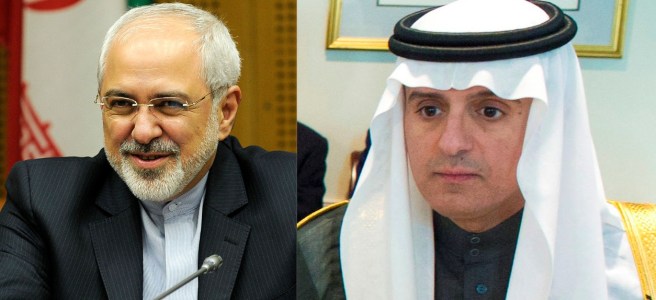
If the United States were to take a purely utilitarian view of ISIS, which would inevitably conclude that the organization is far more of a threat to countries in and around the Middle East than it is to America, then maybe it would conclude that combating the group simply isn’t worth American blood and treasure. And if America suddenly decided to stop propping everybody else up in this fight, wouldn’t that change the calculus for countries all over the region? Iran and Saudi Arabia might actually have to starting fighting ISIS instead of pretending to fight ISIS while really fighting each other by proxy. Turkey might have to acknowledge that shelling the Kurds in Syria isn’t really an optimal policy under the circumstances. Bashar al-Assad might have to start earnestly talking to the Syrian rebels (and vice versa), and Assad’s Russian and Iranian backers might have to reassess their support for a guy whose ongoing presence in Damascus creates the conditions for ISIS’s continued survival. The forces blocking desperately needed governmental reform in Baghdad might have to stop blocking it lest they find ISIS on their doorstep. The Gulf states who play with Libya’s feuding factions like they’re having a nifty game of Risk might have to stop playing games with people’s lives and bend their considerable financial power toward bringing that civil war to an end. The Saudis would quite probably have to stop acting as ISIS’s (and al-Qaeda’s) air force in Yemen. Every government in the Middle East would have to reassess how it responds to political opposition (here’s a hint: societies that permit and even welcome peaceful dissent tend to be less prone to radicalization than societies that repress it) and how it approaches extremist interpretations of Islam.
None of this is to suggest that ISIS isn’t a serious problem. In fact, I would submit that I’m taking ISIS more seriously than anybody in Riyadh, or Tehran, or Moscow, or Ankara. And that’s the problem. The United States can’t be more invested in putting an end to ISIS than all the countries that are genuinely at risk from it. Pursuing any anti-ISIS policy under those conditions is something akin to madness. But the United States also can’t threaten to stop its anti-ISIS activities unless the other countries in the coalition start putting in some genuine effort, because that’s a bluff and everyone knows it. Among other things, drawing down our anti-ISIS operations, or suggesting a draw-down, would be political suicide for whichever American politician tried doing it. So we’re all stuck. The United States has assembled a 66 member coalition of governments that want to pretend to be fighting ISIS while in reality watching America do the work and watching their own people suffer the consequences. ISIS will never be defeated under those conditions, but everybody will keep grinding along anyway, and regular people will keep suffering for it.


It seems playing the terrorism card so often for the last 15 years means now we’re obligated to fight terrorists out of ideology, even if its not the pragmatic thing to do.