
Benjamin Netanyahu’s consolation prize for losing his fight against the Iran deal is likely to be a major new outlay of military aid from the US to Israel. But the first bill out of the gate to propose new aid is Ben Cardin’s “Plan B” attempt to scuttle the Iran deal via the back door, and it envisions providing Israel with weapons that would not only risk scuttling the Iran deal, and break existing arms control treaties to boot, but that Israel almost certainly doesn’t want in the first place. I’m talking about the “Massive Ordinance Penetrator” (MOP), a 30,000 pound bomb intended to strike targets deep underground. Deal opponents in the US rationalize that this weapon would allow Israel to do what the Obama administration won’t: launch a military strike against Iran’s nuclear facilities.
Except it won’t do that, because Israel literally doesn’t have an aircraft capable of carrying a bomb that big. The Israeli Air Force has no dedicated heavy bombers in its arsenal. So the US will also have to transfer the right aircraft to Israel, which means either a B-2 stealth bomber, a B-1B strategic bomber, or a B-52 Stratofortress. We’re not sending any B-2s to anybody, and the B-52 has been obsolete roughly since the Napoleonic Wars, so that’s probably out, which leaves the B-1B. The problem is that New START, the nuclear arms reduction treaty that the US and Russia negotiated in 2009-2010, bans the transfer of strategic bombers like the B-1B to other countries. It might be possible to get around START by modifying the transferred B-1Bs to make them incapable of carrying out nuclear strikes, but as Robert Farley notes, that’s only part of the problem:
The B-1B has a couple of advantages over the B-52. As noted, export of B-1Bs modified for conventional missions is not technically illegal under the terms of the START treaty. Second, the Lancer is probably more survivable in contested airspace than the B-52. Assuming a concerted suppression of enemy air defense (SEAD) campaign, the B-1B can get in and out of the target area more quickly than the B-52, reducing its vulnerability to Iranian defenses. That said, the B-1B is not a stealth aircraft and would not survive on its own against an active and alert air defense network.
Thus the Israelis would need to send several aircraft in order to ensure a successful strike, especially given that many analysts believe that the deepest Iranian targets will require multiple MOPs, in succession, to destroy. A 2009 study estimated that an Iranian air defense network equipped with the S-300 surface-to-air missile system (which the Iranians will have before the Israelis ever get any B-1Bs) could cause up to 30% attrition of an Israeli strike package. To hedge against misses, breakdowns, and shootdowns, the Israelis would require a significant B-1B force (some off-the-cuff calculations suggest 8-10 aircraft) in order to generate a high level of confidence in a successful attack. And to carry out the strike, the Israelis would need to accept a level of risk to their bombers that the US hasn’t been willing to accept since December 1972.
That’s a level of risk, by the way, that the Israelis are highly unlikely to be willing to accept, and we can say that because, if they were willing to accept it, they probably would have asked the US to provide them with some heavy bombers at, oh, any time ever. They’re not even asking for heavy bombers now, yet Congress is discussing (and has been for a few years now) handing them over anyway. Imagine if your family did Christmas this way:
DAD: Here son, I got you a new computer. Merry Christmas!
YOU: Uh, Dad, this computer was obsolete 25 years ago. My cell phone can do more stuff than this.
DAD: No, don’t thank me! You’ve earned it! Enjoy!
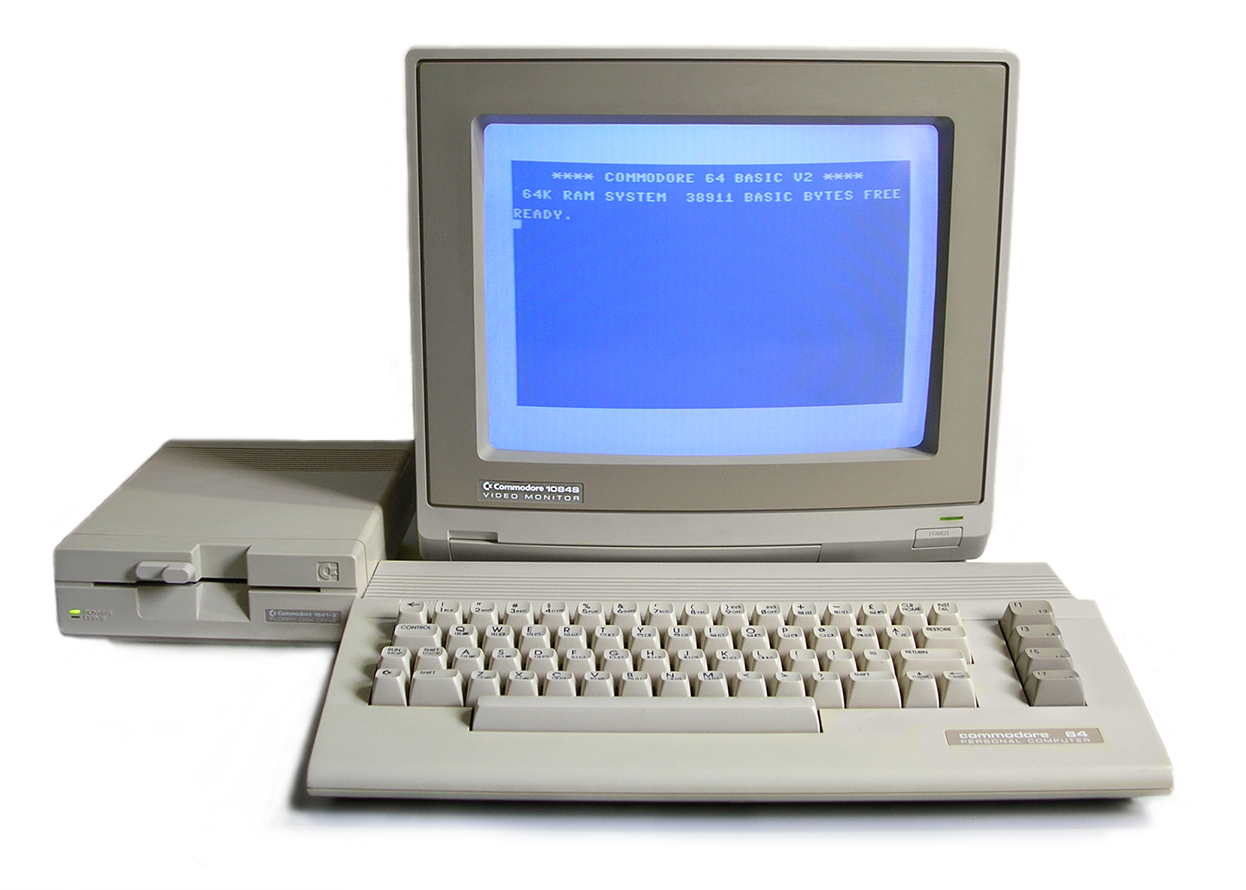
And that’s not a great analogy, since a Commodore 64 is exceedingly unlikely to get the person using it killed, whereas a B-1B flying in hostile Iranian airspace could easily get its crew killed. Sending these weapons to Israel would probably give Iran cause to claim that the US has broken the nuclear deal, since it would theoretically give Israel the means to strike Iran’s nuclear facilities and the deal is supposed to prevent that kind of thing.
So why are Iran deal opponents in Congress apparently prepared to burn down not only the Iran deal but also the signature US-Russia arms control treaty in order to give Israel some stuff it doesn’t want? Politics, obviously. Sending Israel some big-ass bombs and the big-ass planes needed to drop them lets Congress go back to their constituents had claim they’ve done all they could to protect Israel from Iran’s nefarious schemes, and if sending Israel those weapons really does cause Iran to pull out of the deal? Even better. In fact, if Netanyahu really wants to scuttle the deal and he’s actually offered these weapons, he should taken them even if his air force has no intention of doing a single thing with them. The Obama administration presumably wouldn’t go along with sending MOPs and strategic bombers to Israel, but they’re only in office for another 16 months or so, and who knows what the next person will do.
Hey, thanks for reading! If you come here often, and you like what I do, would you please consider contributing something (sorry, that page is a work in progress) to keeping this place running and me out of debtor’s prison? Thank you!

 The Foreign Exchanges Companion