
Over the weekend, as you’ve undoubtedly heard by now, an attempt to rescue U.S. photojournalist Luke Somers from Yemen, where he was being held hostage by Al Qaeda in the Arabian Peninsula, failed. Somers was kidnapped in September 2013 and appeared in a recently released video in which AQAP pledged to murder him within three days if their “demands,” whatever those might have been, were not met by the U.S. government. That would have been Saturday, and so it was Saturday morning when Navy SEALS led a raid on Somers’s location, but were unable to reach him before he was shot and killed by one of his captors.
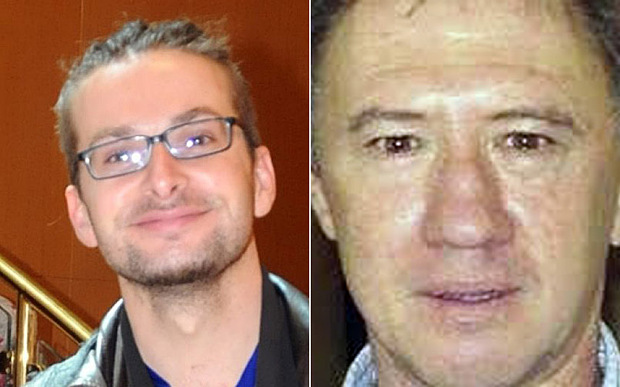
This was a tragedy, obviously. Luke Somers was by all accounts a good man whose loss will be deeply felt by those who knew and cared for him. But equally tragic is the death of South African teacher Peter Korkie, who was also being held hostage along with Somers and who was also killed by the captors at the first sign of the U.S. raid. U.S. forces were apparently unaware that Korkie was also on sight, which means they must also have been unaware that a South African humanitarian organization was deep in negotiations with AQAP to secure Korkie’s release. If Somers was likely about to die anyway, Korkie died while he could see the light at the end of the tunnel. A Yemeni woman and 10 year old boy were also reportedly killed in the raid, and without some evidence that they were part of the hostage operation it’s hard not to see their deaths as adding to the tragedy, along with the deaths of the up to 6 men whose affiliation to AQAP hasn’t yet been established (only three of the dead are known at this point to have been AQAP fighters).
I don’t have a sharp point here. I don’t think you can blame the U.S. for attempting a rescue operation given that Somers was hours away from being killed, and the fact that Korkie was there is just horrid coincidence. You can’t criticize the way the raid was carried out unless you were there, and the fact of the matter is that in any hostage rescue operation like this the hostage taker is probably going to be able to get to the hostages before the rescuers can. There’s always a debate to be had about the role of the United States in the world and in the Middle East, whether we should pull away from the region or go all in to destroy groups like AQAP. This is particularly true in a place like Yemen, where American support helped strengthen the repressive, autocratic forces that spawned the creation of AQAP in the first place. But surely we ought to be able to have that debate without using these two tragically dead men as props.
I do think there’s a compelling argument to be made that the U.S. needs to end its policy of “refusing” (at least publicly) to pay ransom to get hostages back. I understand the argument that paying ransoms could encourage more kidnappings. The thing is, though, we do negotiate ransoms in certain circumstances, even though we try to pretend we don’t, which means all that talk about not encouraging more kidnappings is pretty empty (we ransom some hostages, thereby supposedly encouraging the taking of additional hostages for whom we then arbitrarily refuse to bargain). This grab bag approach to dealing with hostage takers (talking tough, negotiating with some, not negotiating with others, carrying out raids on some, not raiding others) clearly isn’t doing anything to deter people from taking American hostages. But expecting internal consistency in U.S. policy-making seems like a fool’s game most of the time, so I wouldn’t expect any changes here.
Mostly I think the deaths of Luke Somers and Peter Korkie should remind us that this stuff isn’t happening in a movie, or a TV show, or a video game where the hostages will be rescued in the end and the good guys always win. Sometimes things just go terribly, tragically wrong, and there’s no James Bond or Jack Bauer around to save the day.

 The Foreign Exchanges Companion